When people talk about brass manufacturing in India, one city stands above all others: Jamnagar, Gujarat. Known worldwide as the “Brass City of India,” Jamnagar has earned this title through decades of industrial excellence, innovation, and export success. The city is home to one of the largest brass manufacturing clusters in the world and serves as the backbone of India’s brass component industry.
Today, Jamnagar’s brass sector is far more than a local industry. It is a globally recognized manufacturing ecosystem supplying precision-engineered brass components to industries ranging from electrical and electronics to plumbing, automotive, telecommunications, and industrial machinery. Industry sources estimate that the city accounts for nearly 80% of India’s brass exports and hosts more than 5,000 manufacturing units. The cluster generates billions of dollars in annual output and supports hundreds of thousands of jobs directly and indirectly. This remarkable combination of scale, specialization, and export capability has transformed Jamnagar from a regional manufacturing center into an international industrial powerhouse.
The story of Jamnagar’s brass industry is a fascinating example of how traditional craftsmanship can evolve into a world-class manufacturing ecosystem. Several decades ago, local entrepreneurs began producing small brass components using simple machinery and manual techniques. These early manufacturers focused on quality workmanship and gradually developed specialized expertise in machining brass.
As demand for brass parts increased across India and overseas markets, more businesses entered the sector. What started as small family-operated workshops eventually expanded into a network of casting units, extrusion facilities, machining shops, plating plants, inspection centers, and export houses. This industrial clustering created significant advantages. Manufacturers could source raw materials, machining services, surface treatments, and packaging solutions within a short distance, reducing costs and improving efficiency.
Over time, the concentration of skills, knowledge, and supporting industries created a self-sustaining ecosystem. New businesses benefited from experienced labor, supplier networks, and established export channels. The result was rapid growth that positioned Jamnagar as the undisputed leader in brass manufacturing not only in India but also in global markets. Today, the city’s industrial zones remain a living example of how specialization and collaboration can drive long-term economic success.
One of the major reasons behind Jamnagar’s success is its strategic geographical location in Gujarat. The city enjoys excellent connectivity to major ports along India’s western coastline, making international trade efficient and cost-effective. Exporters can quickly ship products to Europe, North America, the Middle East, Africa, and Asia.
The state’s strong industrial infrastructure further strengthens Jamnagar’s competitiveness. Gujarat consistently ranks among India’s leading exporting states and offers a business-friendly environment that supports manufacturing and trade. Reliable transportation networks, logistics facilities, industrial estates, and access to global shipping routes allow brass manufacturers to meet tight delivery schedules and maintain strong relationships with overseas customers.
Scale is one of Jamnagar’s greatest strengths. The city hosts more than 5,000 brass manufacturing units, creating one of the largest brass production clusters in the world. These units range from small workshops specializing in specific operations to large export-oriented manufacturers serving multinational clients.
Small and medium enterprises form the foundation of Jamnagar’s industrial success. These businesses create flexibility, encourage innovation, and allow manufacturers to handle highly customized orders. The cluster model enables companies to focus on their core expertise while relying on nearby partners for supporting processes such as casting, forging, electroplating, polishing, and packaging.
This interconnected network dramatically reduces production lead times and helps manufacturers remain competitive in global markets. It also creates significant employment opportunities and contributes to the economic development of the entire region. Industry organizations report that the brass sector supports hundreds of thousands of jobs either directly or indirectly, making it one of the region’s most important economic drivers.
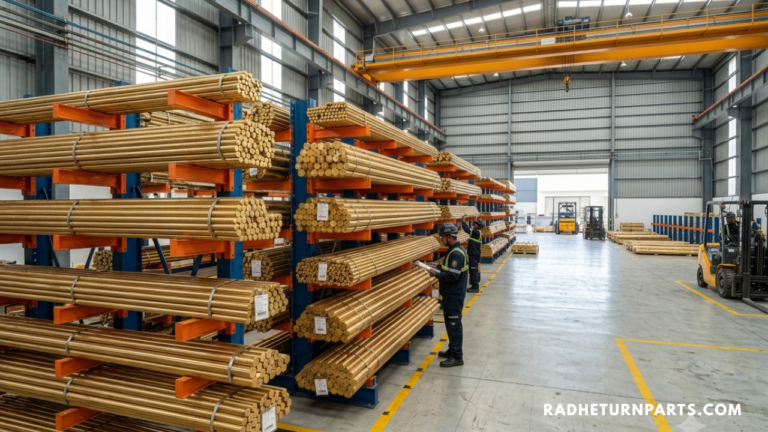
Another key factor behind Jamnagar’s dominance is its efficient raw material supply chain. Brass manufacturing relies heavily on recycled brass scrap, and Jamnagar has developed one of the most sophisticated recycling ecosystems in the industry. Large quantities of brass scrap are imported from international markets and processed into high-quality raw materials used for manufacturing precision components.
Industry reports suggest that nearly 70% of the raw material used in the cluster comes from recycled sources. This not only reduces production costs but also supports environmental sustainability. The city’s expertise in recycling, segregation, melting, casting, and material recovery has become a significant competitive advantage. Manufacturers can maintain consistent material quality while keeping costs under control, which ultimately benefits customers around the world.
Machines play an important role in manufacturing, but people remain the true strength of Jamnagar’s brass industry. The city has developed a highly skilled workforce through generations of hands-on experience. Many workers learn the trade from family members, creating a continuous transfer of knowledge and technical expertise.
This deep understanding of brass machining allows manufacturers to produce complex components with remarkable precision. Workers are familiar with material behavior, machining techniques, tooling requirements, and quality standards. When combined with modern equipment and training programs, this expertise enables companies to consistently meet demanding international specifications. The result is a workforce capable of producing everything from simple brass fittings to highly engineered industrial components.
While traditional craftsmanship laid the foundation, technology has fueled the industry’s modern growth. Today’s leading manufacturers in Jamnagar use advanced CNC machines, automated production systems, quality inspection equipment, and sophisticated manufacturing processes to achieve exceptional precision and consistency.
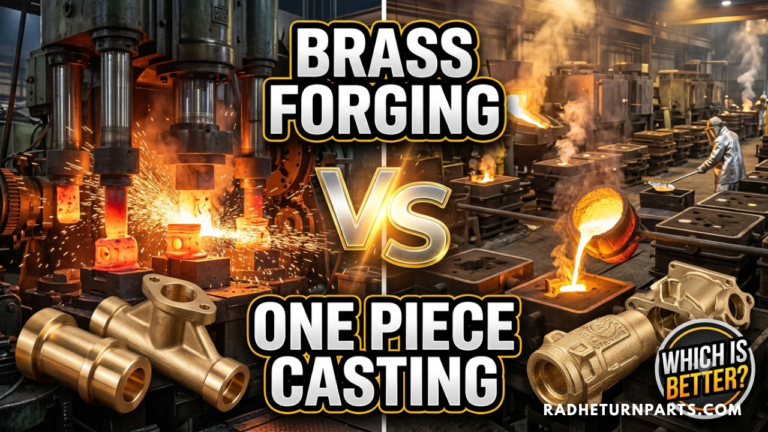
Many factories now offer vertically integrated manufacturing capabilities that include casting, extrusion, forging, CNC machining, threading, finishing, plating, assembly, and quality testing under one roof. This integrated approach improves efficiency and allows manufacturers to maintain greater control over product quality. Global buyers increasingly prefer suppliers who can manage the entire production process, and Jamnagar’s manufacturers have adapted successfully to this expectation.
The brass industry in Jamnagar produces an extensive range of electrical and electronic components including terminals, connectors, switchgear parts, neutral links, fuse components, and grounding accessories.
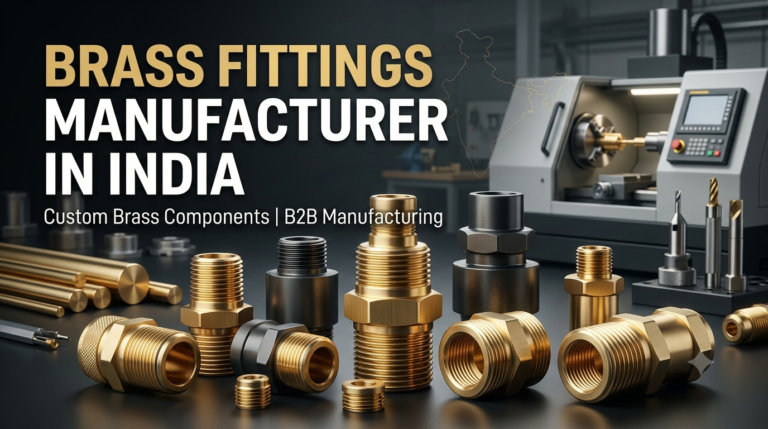
Manufacturers also produce brass fittings for plumbing systems, sanitary applications, valves, adapters, couplings, elbows, tees, and pipe connectors used worldwide.
Automotive manufacturers rely on Jamnagar for precision brass inserts, valve components, sensor parts, fasteners, tube fittings, and specialized machined parts. The diversity of products demonstrates the versatility and capability of the local manufacturing ecosystem.
Jamnagar’s success is closely linked to exports. Manufacturers supply brass products to customers across Europe, North America, the Middle East, Africa, Southeast Asia, and many other regions. Industry sources indicate that products manufactured in Jamnagar reach more than 100 countries worldwide.
The city’s reputation for quality, reliability, and competitive pricing has helped establish long-term relationships with global buyers. International customers often view Jamnagar as a one-stop destination for brass components because they can source a wide variety of products from a highly concentrated supplier network. This export-oriented mindset has been a major driver of growth and innovation within the industry.
Global buyers choose Jamnagar for three primary reasons: quality, cost-effectiveness, and customization. Manufacturers have developed extensive experience in producing components according to international standards and customer specifications. Whether the requirement involves custom dimensions, special finishes, unique materials, or complex machining operations, suppliers in Jamnagar can often provide flexible solutions.
The cluster structure also creates cost advantages. Because suppliers, subcontractors, raw material providers, and logistics services operate within the same ecosystem, manufacturers can reduce overhead expenses and maintain competitive pricing. This combination of quality and affordability makes Jamnagar an attractive sourcing destination for businesses worldwide.
Environmental responsibility is becoming increasingly important in global manufacturing. Jamnagar’s brass industry has made significant progress through recycling initiatives and efficient resource utilization. The widespread use of recycled brass scrap reduces dependence on newly mined metals and lowers environmental impact.
Many manufacturers have also invested in cleaner production methods, energy-efficient equipment, waste management systems, and quality control processes. As international customers place greater emphasis on sustainability, these initiatives help strengthen the industry’s global competitiveness and reputation.
The growth of Jamnagar’s brass industry has been supported by industrial policies, infrastructure development, and government initiatives aimed at strengthening manufacturing and exports. Dedicated industrial estates provide space for expansion, while industry associations help businesses address common challenges and improve competitiveness.
Training programs, export promotion initiatives, and technology upgrades continue to support the sector’s development. Combined with Gujarat’s strong manufacturing ecosystem, these factors create a favorable environment for long-term industrial growth.
Like every manufacturing hub, Jamnagar faces challenges. Fluctuating raw material prices, changing international trade regulations, increasing competition, and evolving customer expectations require continuous adaptation. Manufacturers must also invest in automation, digitalization, and sustainability to remain competitive.
At the same time, opportunities continue to grow. Demand for precision-engineered brass components is increasing across industries such as renewable energy, electric vehicles, electronics, telecommunications, and industrial automation. Manufacturers that embrace innovation and advanced manufacturing technologies are well positioned to benefit from these trends.
The future looks promising for Jamnagar. The city’s unique combination of skilled labor, manufacturing expertise, industrial infrastructure, export orientation, and entrepreneurial spirit provides a strong foundation for continued growth.
As global supply chains evolve, buyers are increasingly seeking reliable manufacturing partners capable of delivering quality products at competitive prices. Jamnagar’s established reputation and extensive manufacturing ecosystem place it in an excellent position to capture new opportunities. The city is expected to remain India’s leading brass manufacturing hub and strengthen its position in global markets for years to come.
Jamnagar is called the Brass Capital of India because no other city matches its scale, specialization, expertise, and global reach in brass manufacturing. With more than 5,000 manufacturing units, a workforce skilled through generations, strong export capabilities, advanced production technologies, and a highly integrated industrial ecosystem, the city has built an extraordinary competitive advantage. From electrical connectors and plumbing fittings to precision-engineered industrial components, products manufactured in Jamnagar power industries around the world.
Its success story demonstrates how entrepreneurship, specialization, innovation, and collaboration can transform a regional industry into a globally recognized manufacturing powerhouse. As demand for high-quality brass components continues to grow, Jamnagar is well positioned to remain the undisputed Brass City of India.
Jamnagar is called the Brass City of India because it hosts thousands of brass manufacturing units and contributes a significant share of India’s brass component production and exports.
Its integrated manufacturing ecosystem, skilled workforce, strong export infrastructure, large-scale production capacity, and extensive supplier network make Jamnagar unique.
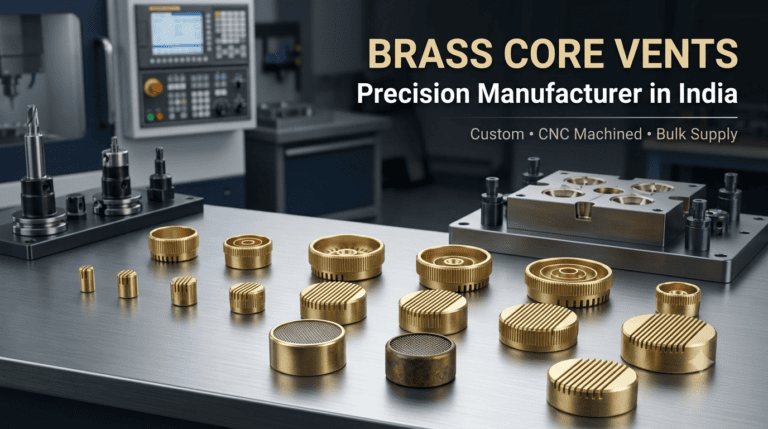
Because of the vast technical expertise in the region, virtually any brass component can be manufactured here. Common products include high-pressure misting and fogging nozzles, cable glands, electrical terminals, automotive parts, sanitary fittings, and custom CNC-turned components built to strict engineering blueprints.
Radhe Industries is a trusted manufacturer of precision brass components and CNC turned parts based in Jamnagar, Gujarat, India’s renowned brass manufacturing hub.
+91 7874824696
Contact@radheturnparts.com Parth@radheturnparts.com
GIDC Phase 2, Plot no- 85, Dared, Jamnagar.
Copyright ©2026. All Rights Reserved by Radhe Industries